


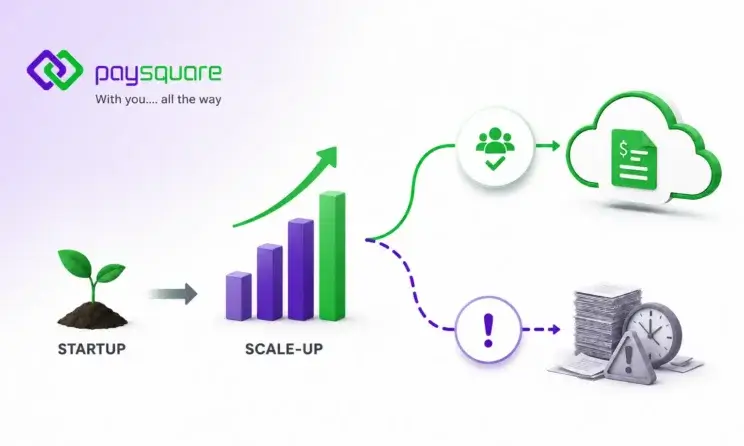
Every Indian startup begins in the same way. A founder giving salaries manually with no payslips, no PF filings and by assuming payroll compliance can wait. This works for five employees but it starts to crack at ten, and by twenty it becomes a crisis.
The real question isn’t whether to outsource payroll, it’s when!
The Clear Signs You’ve Already Waited Long
Most startups don’t plan to delay payroll outsourcing. It happens as the team grows and the compliance burden builds up. Here are some of the warning signs:
- Payroll takes more than a day each month. This is the time that neither the founder nor the HR team can’t afford to lose.
- Statutory filings are slipping. Missed PF challans, delayed ESI returns or incorrect TDS deductions.
- An investor or auditor has asked for compliance records and those records are incomplete or inconsistent.
- You’re hiring across multiple states and each state brings different Professional Tax rules and labour law obligations.
- Employees are asking questions about their payslips and no one has clean answers.
The cost of each missed PF filing can range from ₹5,000 to ₹25,000 in penalties. This is often more than a month of outsourcing fees.
The Right Time to Outsource: Earlier Than You Think
The best time to outsource payroll is before things start becoming difficult to manage. For many startups, this happens when the team grows beyond 10–15 employees or hiring starts picking up quickly. At this stage, managing EPFO, ESIC, TDS calculations, and payroll records manually can become time-consuming and increase the risk of compliance errors.
By outsourcing payroll early, startups can stay organised and investor-ready as they grow. Salary expenses, PF contributions, and TDS liabilities are recorded accurately in financial statements, especially when combined with reliable accounting outsourcing services. This not only makes audits easier but also helps create smoother and more transparent conversations with investors and stakeholders.
What Waiting Too Long Actually Costs
Delayed outsourcing creates a problem: compliance debt. Backdated PF registrations, restatement of salary records and retroactive TDS corrections are expensive to fix. They also erode employee trust and create friction during due diligence.
Scale-ups preparing for Series A or Series B funding are especially vulnerable. Investors closely examine payroll hygiene and compliance gaps can derail a round.
Making the Transition: What a Good Partner Looks Like
When choosing a payroll outsourcing provider, startups need more than salary processing. The right partner should manage end-to-end compliance. PF, ESI, TDS, Professional Tax, payslip generation and Form 16. They should also give founders visibility through monthly reports and compliance dashboards.
Paysquare, one of India’s trusted payroll outsourcing companies supports businesses at every stage. They ensure zero compliance gaps from day one: from startups with less than 10 employees to enterprises managing large headcounts.
The Bottom Line
The time to outsource payroll was when you hired your first employee. The best time is right now. As startups move into scale-up mode, payroll complexity affects compliance risk, investor readiness and operational efficiency. Delaying the transition only increases the cost of correction later.
If your startup is approaching hiring, multi-state expansion or preparing for investor funding evaluate a structured payroll outsourcing solution. This ensures compliance, accuracy and scalability from day one. Partnering with a provider, like Paysquare, helps startups eliminate compliance risk. It also frees teams to focus on growth, product and scale.
Also Read: 4 Working Capital Management Strategies for Your Business